More than a habit.
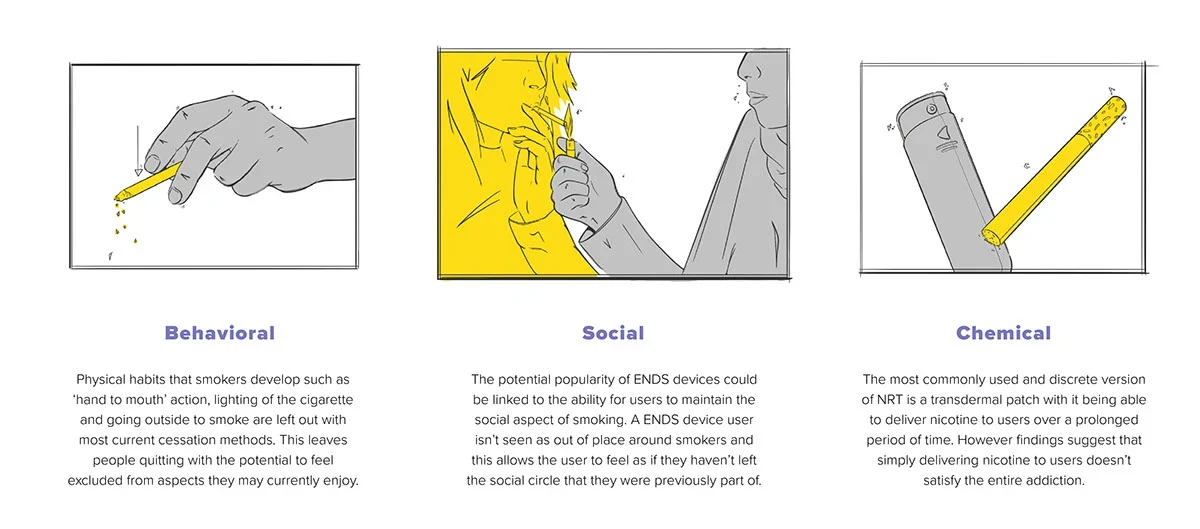
Flow began with a question: what does someone give up when they stop smoking? At Brighton, I explored the physical routines, social moments and chemical dependence that sit around a cigarette.
That changed the brief. Replacing nicotine was only one part of the experience. The hand-to-mouth action and familiar rituals mattered too.
Separate the ritual
from the nicotine.
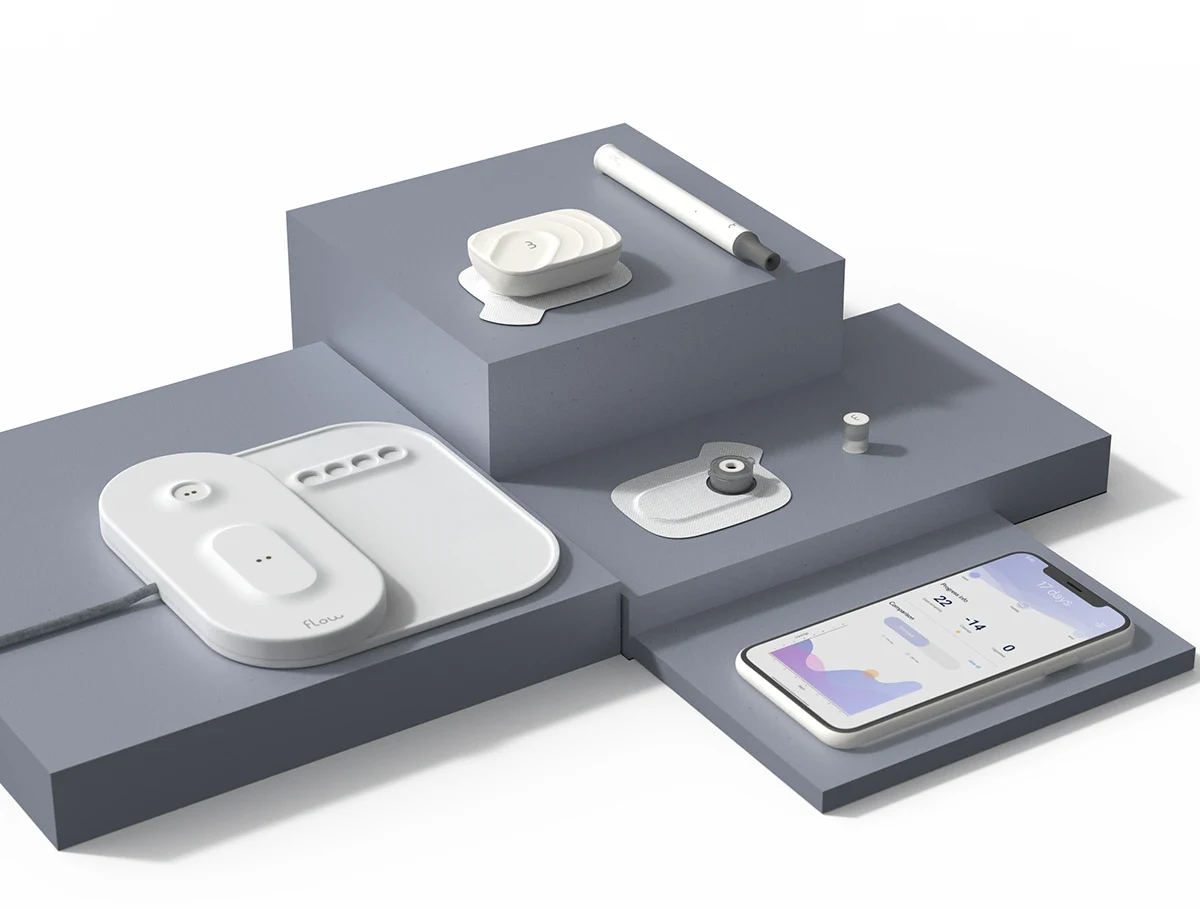
I explored a system that could address those needs separately: a wearable for nicotine delivery, a connected inhaler for the physical habit, and an app to bring the experience together.
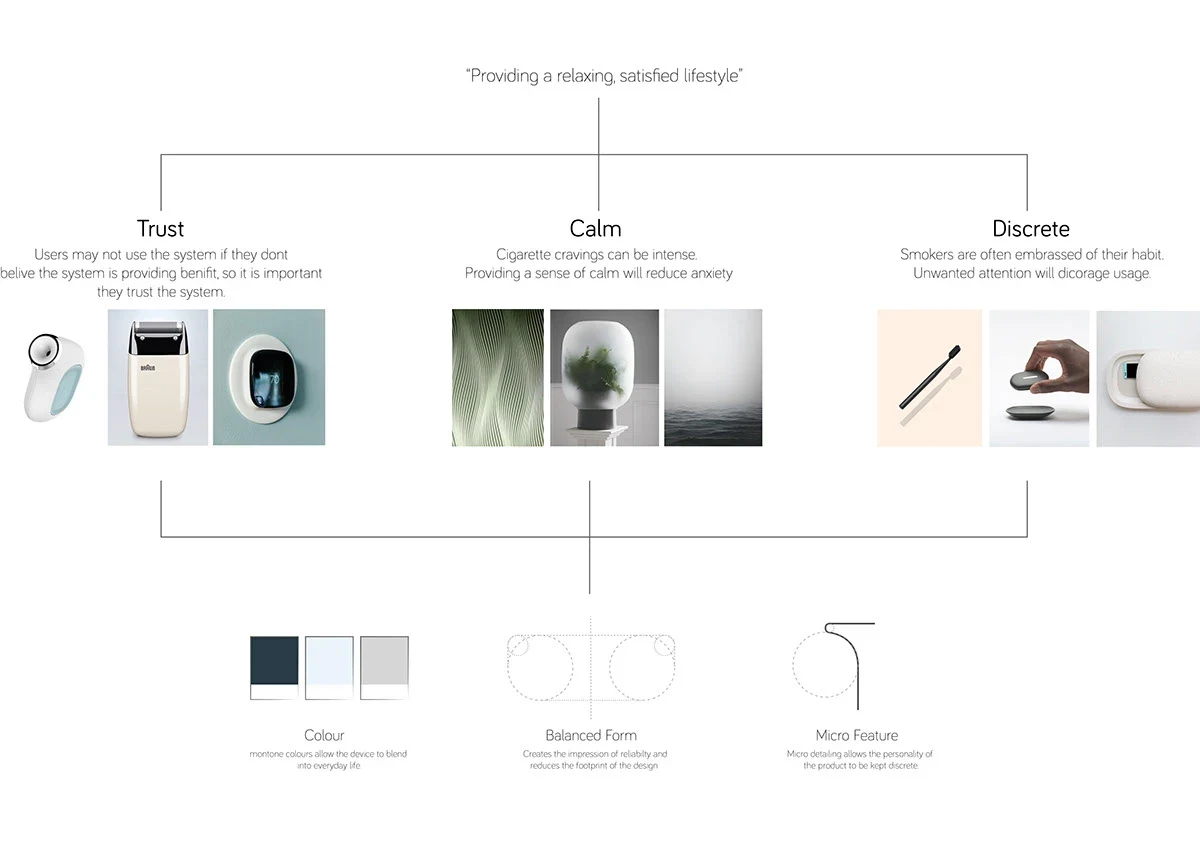
The concept proposed using inhaler activity to understand patterns in cravings and inform delivery through the wearable. Trust, calm and discretion became the principles for the product’s form and feel.
Think with your hands.
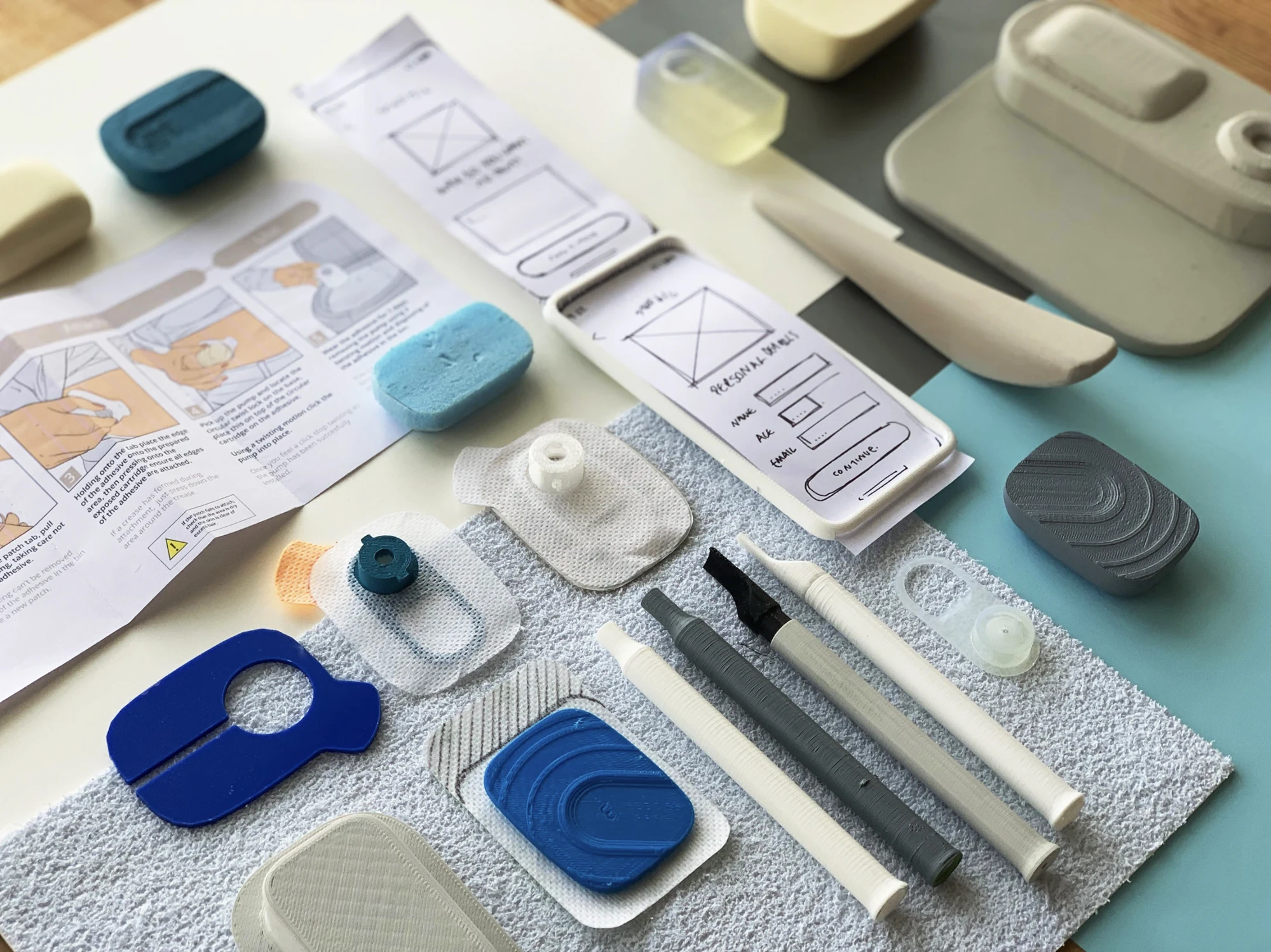
I developed the idea across physical and digital prototypes. Foam models and 3D-printed parts explored the devices, while paper screens made the app experience tangible alongside them.
Working across both helped me think about the whole experience: wearing the product, holding the inhaler, setting it up and understanding progress.
One connected experience.
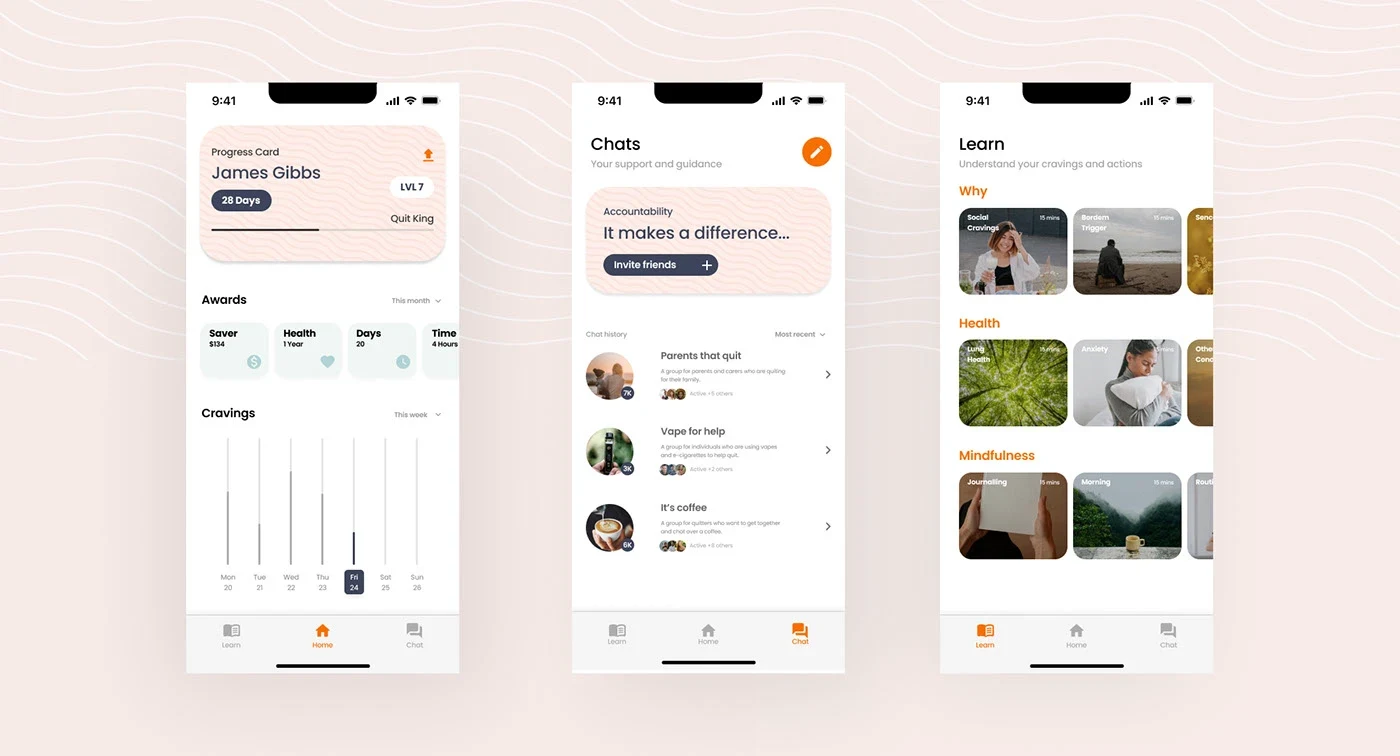
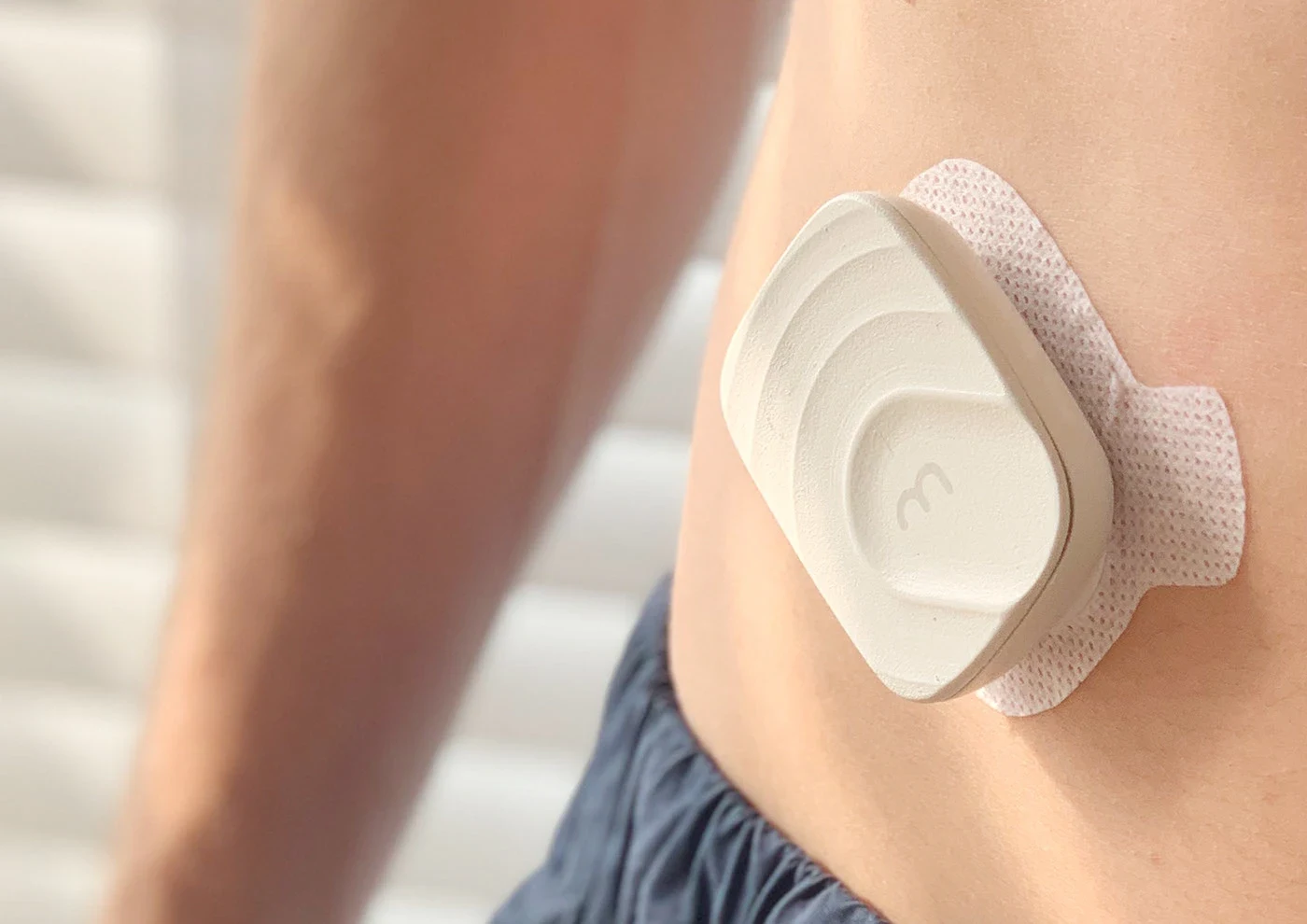
The final concept brought together a transdermal wearable, an inhaler and a companion app. The app explored progress tracking, learning and social support alongside the physical products.
As a university project, Flow gave me the space to connect research, hardware and software. Its lasting impact on my work was learning to start with someone else’s experience, then connect that understanding with technical possibilities. The project helped me get my role at Cambridge Consultants.